Showing posts with label military. Show all posts

Saturday, September 6, 2025

Russo-Ukrainian War: The Accuracy International AXMC

Source: Ministry of Defense of Ukraine

     A sniper belonging to the 4th. Rapid Reaction Brigade “Rubizh” (“Frontier”) who looks to be equipped with a AXMC bolt-action rifle designed and built by the British company Accuracy International. The AXMC (MC standing for Multi-Caliber) is a rifle available on the open market, typically costing well over $7,500USD or more depending on the options added and what caliber is desired. The rifle finds use by military, law enforcement, and civilian sharpshooters. Of interest, the soldier is wearing the patch of the U.S. Army's 1st. Infantry Division, known as the "Big Red One".

     Ukrainian snipers are known to favor the .308 Winchester cartridge (made specifically for the civilian market) as it offers a much higher pressure and accuracy than the very similar military 7.62x51mm NATO cartridge. The .308 Winchester can attain velocities of up to 3,500 feet per second. Another benefit of having a rifle chambered for the .308 Winchester round is that the rifle can also utilize the military 7.62x51mm cartridge without any concerns. However, not all battle rifles using the 7.62x51mm cartridge can handle the .308 Winchester without risk of problems such as cartridge case rupture or splitting. In the hands of a trained sniper and the right conditions, the .308 Winchester round can hit targets out to .5 of a mile. The AXMC is also available in .300 Winchester Magnum and .338 Lapua Magnum cartridges.

     The barrel of the AXMC is made of match grade, stainless steel and uses Accuracy International's Quickloc system which permits the operator to change barrels without needing tools. The proofed steel action features a leaf spring extractor and a bolt whose handle is turned 60 degrees. The rifle has a 3-position safety along with a 2-stage trigger. From appearances, the rifle in the photograph looks to be fitted with a 27” barrel. Magazine capacity is 10 rounds.

     The AXMC utilizes a configurable pistol grip (as it is detachable and easy replaced with another style) and a buttstock which offers the ability to adjust stock length. There is also an adjustable cheek piece at the top of the stock and a rear grip along the bottom of the stock. The latter can use an optional butt spike. When not needed, the stock can fold forward, resting along the right side of the rifle.

     It is difficult to say what suppressor is fitted but most AX model rifles are built to accept suppressors made by the Swiss company B&T AG. Also, the AXMC has a top Picatinny rail (MIL-STD 1913). Additional rails can be added to the sides and bottom of the forend using Accuracy International's KeySlot™ system and the soldier here has added a bottom rail which supports a folding bipod. The scope mounted atop the rifle appears to be a Nightforce Optics ATACR series rifle scope.

Friday, January 10, 2025

Russo-Ukrainian War: BMP-2, 141st. Mechanized Brigade

Source: General Staff of the Armed Forces of Ukraine

     A Ukrainian BMP-2 IFV (Infantry Fighting Vehicle) belonging to the 141st. Mechanized Brigade, late autumn 2024. This particular example had been updated by the Zhytomyr Armored Vehicle Factory back in 2021 though it is missing the side skirts. The crew has added a anti-drone cage on the turret and lashed a log unditching beam to the back of the vehicle (a common practice). The BMP-2 is one of the most common IFVs in the world with over 35,000 having been built since 1979 (including variants). It first entered service in 1980 in the Soviet Army and is the successor to the original BMP-1.

     The typical power plant for the 14-ton BMP-2 is a UTD-20 series, water-cooled, 6-cylinder diesel engine that develops 300 horsepower which is paired to a manual transmission with a 6-speed gearbox (5 forward, 1 reverse). This provides a maximum road speed of 40 miles per hour and, terrain depending, up to 28 miles per hour off-road. Being amphibious, the top speed in calm waters is 4 miles per hour using its tracks as propulsion. 122 gallons of fuel are carried which provides for a maximum cruise range of 342 miles.

     For armament, the 2-man turret is fitted with a 2A42 30mm autocannon, a co-axial PKT 7.62mm machine-gun, and pintle mount on the turret roof for a 9M113 Konkurs (“Contest”; NATO reporting name AT-5 Spandrel) ATGM (Anti-Tank Guided Missile). The Shipunov 2A42, which uses a gas-operated action, has a rate of fire between 200 to 300 rounds per minute or 550 to 800 rounds per minute depending on the gunner's selection. The two most common rounds are the 3UOF8 HEI (High-Explosive Incendiary) and the 3UBR6 APBC-T (Armor-Piercing Ballistic Cap Tracer). The 3UBR6 can penetrate 20mm of RHA (Rolled Homogeneous Armor) at a 60 degree slope at .4 of a mile but can reach 1.2 miles in effective range though the penetration value drops significantly. The 3UOF8 has a maximum range of 2.5 miles. The 2A42 uses a dual feed so the weapon can utilized mixed ammunition. The turret provides for 360 degree of traverse while the 2E36-1 2-plane, stabilized gun mount allows up to 75 degrees in elevation (and 5 degrees of depression), allowing for engagement of low flying aircraft (a 1PZ-3 scope is provided for the commander in this task). The usual ammunition load is 160 rounds of armor-piercing and 340 rounds of high-explosive. The PKT is provided with 2,000 rounds of ammunition. The gunner is provided with a BPK-1-2 binocular sight with low light capability, a TNPT-1 designator, and a FG-126 infrared searchlight (mounted co-axially with the cannon). For the Konkurs, four missiles are carried and the aiming is fully manual. Finally, there are seven firing ports (three per rear side; one in the left rear entry/exit door) for use by occupants in the troop compartment.

     The BMP-2 uses welded steel alloy armor to protect the 3 man crew and up to seven infantrymen with the front hull supporting between 16mm to 25mm thick armor but thanks to the slope angle, the equivalent is 30mm to 46mm. The turret has 20mm thick armor all around but with the angled turret, the equivalent is 28mm. Most BMP-2 turrets have 6mm thick appliqué armor added to them with similar plating on the hull sides. The side armor of the BMP-2 is approximately 13mm thick but benefits little from sloping. Frontally, the BMP-2 is said to be able to withstand standard 23mm armor-piercing rounds while the sides can protect against 7.62x39mm armor-piercing bullets. Other protective systems include a GO-27 radiological/chemical detector, a PAZ overpressure NBC (Nuclear Biological Chemical) system, fire suppression system, and two turret mounted Type 902V Tucha smoke grenade dischargers with three tubes for 81mm grenades per discharger.

     For communication, the BMP-2 is equipped with either a R-123M or R-173 radio. Other systems include a GPK-59 gyrocompass, TNPO-170A periscope (for the driver), TNPO-170A periscopes for the firing ports, OU-3GA2 infrared searchlight on the turret for the commander, TNP-165A designator (for the commander), TKN-3B binocular day/low light sight (for the commander), and a TVNE-1PA night vision scope.

Monday, July 26, 2021

Bundeswehr Soldaten: 3. Panzerdivision


     Female soldiers belonging to the 3. Panzerdivision (3. PzDiv) march on parade. The Bundeswehr unit was formed on July 2, 1956 in Hamburg, Germany and was one of the largest formations to have been stood up post-World War Two. The main area of operations for the 3. PzDiv was the Norddeutsches Tiefland (North German Plain) which consisted of a region bounded by the North Sea coast and the Baltic Sea coast. The Norddeutsches Tiefland was considered one of the two major invasion routes (the other being the Fulda-Lücke or Fulda Gap) that Soviet and Warsaw Pact countries would take into Germany as the topography favored the use of armored and mechanized forces. The region was also militarily protected by several NATO nations, to include U.S., Dutch, Belgian, and British forces. The headquarters of the unit, Stab./3. PzDiv, was based at Estetal Kaserne located in Buxtehude, Germany.

     The unit is identified by the sleeve patch that consisted of two crossed horse heads on a red background. Interestingly, the insignia was similar to that used by the 216. Infanterie-Division in World War Two. The division was made up of Panzergrenadierbrigade 7 (headquartered in Hamburg), Panzerbrigade 8 (based in Lüneburg), Panzerlehrbrigade 9 (based in Munster), Artillerieregiment 3 (headquartered in Stade), and sixteen other units housed throughout the region. The women are wearing the beret badge for panzergrenadiertruppen which is a stylized Marder IFV (Infantry Fighting Vehicle) above crossed rifles over the West German flag, all encompassed by a wreath. The green beret was worn by the combat arms of the Bundeswehr (infantry, jägertruppe, panzergrenadiers, armor, etc.). Thus, the women could have belonged to Panzergrenadierbataillon 71, 72, or 73 under Panzergrenadierbrigade 7 or Panzergrenadierbataillon 82 which was under Panzerbrigade 8.

     The typical Panzergrenadierbataillon of the late 1980s was equipped with 24 to 35 Marder (“Marten”; a type of mustelid animal) IFVs, six Panzermörser M113s (M113s converted to carry a 120mm mortar), and 12 to 23 M113 APCs (Armored Personnel Carriers). Panzergrenadierbataillon 71, a reserve unit, was reinforced with thirteen Leopard 1A5 MBTs (Main Battle Tank).

     The weapon the panzergrenadiers are carrying is the Heckler & Koch G36 which was adopted by the Bundeswehr in 1996. Development of the G36 began in 1995 in a hasty attempt to field a 5.56x54mm battle rifle after the cancellation of the radical 4.7x33mm caseless G11 rifle. The G36 is a gas operated, rotating bolt weapon which was a departure by H&K in not using their battle tested roller-lock, delayed blowback system. This was done to reduce the per unit cost of the G36 as well as simplify the operation. The weapon is fed from 30-round translucent plastic magazines which permit the firer to quickly assess remaining ammunition in the weapon. A tubular folding stock was fitted and the G36 has a integral ZF 3×4° telescopic sight graduated out to 800 meters. There is also a reflex sight on top of the telescopic sight but is only calibrated out to 100 meters. A notch sight is provided in case of sight failure and this is incorporated into the sighting bridge which doubles as a carry handle. Unloaded, the G36 weighs 7.6 pounds and this weight savings comes from the use of carbon fiber-reinforced polyamide, steel, and Nylon 66 (which is lightweight but has high mechanical strength, stability, and rigidity). Rate of fire is 750 rounds per minute with an effective range of 800 meters though the 2,788 foot per second muzzle velocity gives the round a maximum range of 2, 860 meters. The firer has two settings (aside from Sicher, or Safe) and that is Einzelfeuer (semi-automatic) and Feuerstoß (full automatic fire).

     Elements of the 3. PzDiv were deployed in 1962, 1976, and 1979 to assist local civil authorities during flooding in the region and in the case of 1979, emergency conditions created by heavy snowfalls. Some elements were also mobilized and sent to Somalia in 1993 as part of the second phase of the United Nations Operation in Somalia (UNOSOM). Called UNOSOM II, the major incident was the Battle of Mogadishu...best known in the U.S. as the “Black Hawk Down” incident. On September 30, 1994, the 3. PzDiv was disbanded, its last commander being Generalmajor Gerd Schultze-Rhonhof. Following the disbandment, Panzerlehrbrigade 9 was incorporated into the 1. Panzerdivision.

Wednesday, July 14, 2021

The Rhodesian Pookie: Expediency Turned Excellence

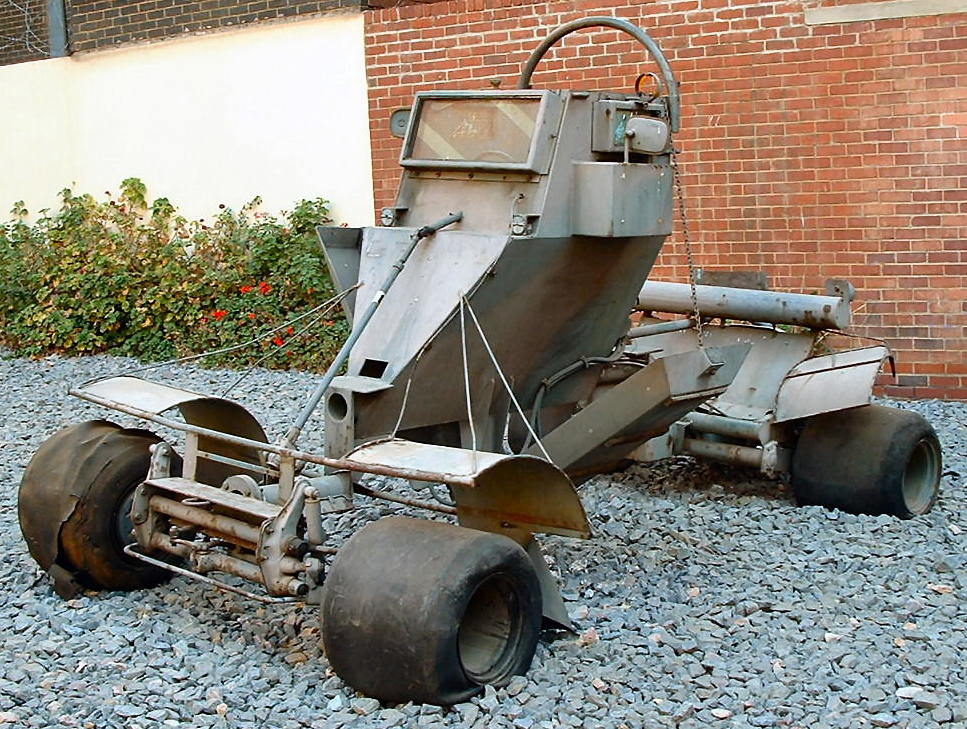
A surviving Pookie on display at the South African Police Service Museum in Muizenberg, Cape Town, Western Cape. The mine-detector "wing" pans are shown in the stowed position. Photograph by Steve Barrow.

      Desperation has often proved to be catalyst for solutions to a problem. During the Rhodesian Bush War which raged for 15 long years from July 4, 1964 to December 12, 1979, the guerilla forces of the Zimbabwe African National Liberation Army (ZANLA) and the Zimbabwe People's Revolutionary Army (ZIPRA) waged a campaign of mining roads as a means of limiting or cutting off roads, isolating Rhodesian Security Force garrisons, and also as a means to instill fear in any user of roads, civilian or military, by way of casualties and deaths caused by the mines. Rhodesian Security Forces took numerous steps to try to curb the mine campaign by interdicting supply lines of the guerillas, paving roads using tar (which made burying mines more difficult), and improving mine detection methods. In time, it was seen that finding every buried mine simply wasn’t possible and so another avenue was to improve the survivability of military vehicles that struck a mine. At first, improvised methods were used and while there was an improvement in survival, it was seen that the mine’s explosion was essentially trapped beneath the flat surface of vehicles (such as trucks) which caused severe damage. From this, vehicles began to be purpose built using V-shaped bodies which dissipated the explosive force of the mine away from the vehicle. It was seen that crew/passenger survivability improved significantly and that vehicles could be repaired rather than scrapped. 

     Still, the means to detect mines continued and using the new mine resistant vehicle technology, automotive engineer Ernest Konschel designed the Pookie (named after the Galago, a nocturnal primate) mine-detection vehicle. The driver sat in an armored monocoque capsule which was connected to the frame by shear bolts and the armor was proof against small arms fire. The frame utilized the front and rear suspension units from a Type Two Volkswagen Kombi as the units exerted less downward force than conventional coil springs. For wheels, the Pookie was fitted with used Formula 1 racing tires as their width was often wider than holes used to bury mines. For power, the Pookie used a 1,600cc Volkswagen engine and carried 40 liters of fuel. On each side of the Pookie was a “wing” which contained a Milton detection pan. In all, the Pookie had a ground pressure of 3lbs. per square inch which was less than that of a human which meant it could drive over a mine (even anti-personnel mines) and not detonate it. 

     Sixty-eight Pookie vehicles were built (some sources say seventy-six) starting in 1976 and were quickly deployed and by 1980, Pookie drivers located some 550 mines without a single loss to them. Twelve vehicles were damaged from rocket fire and also command detonated mines. Only a single driver was killed when the capsule was hit by an RPG. The Pookie would later be fitted with the “Spider”, a 24-barrel, 12-guage rotary shotgun system as a means to respond to guerrilla ambushes. The driver, using a chain rip cord, could ripple fire the barrels, throwing buckshot across a 270 degree arc. So devastating was this weapon that guerillas would often let the Pookie pass (as it typically led convoys) before launching their ambush. In 1999, MineTech (a British company) built a number of vehicles which looked much like the Pookie except for using different engines and other enhancements. These were deployed by private “de-mining” contractors in Afghanistan and Somalia.

1971-1972: The Brief Existence of the "German Hair Force"

(Bundeswehr Photograph; Author's Collection)

     On February 8, 1971, German Defense Minister Helmut Schmidt issued a regulation that Bundeswehr male soldiers could have long hair as long as it was well kept and did not interfere with their duties. If their hair did, then a hairnet (similar to those used by food workers) had to be worn. This new regulation was the result of the fallout due to one Albrecht Schmeissner. After being inducted into service by his recruiters in 1967, it was assumed Schmeissner would buzz cut his flowing mane of hair. Except he didn't. Instead, Schmeissner pointed to the existing grooming regulations and stated there was no mention of a maximum length and so he did not have to cut it. Schmeissner stuck to his guns for 45 days during which time he was the frequent target of harassment and scorn. But, he finally caved and got his hair cut after being threatened with insubordination. Still, this act of defiance reached the ears of Bundeswehr leadership who, in light of long hair for men being “in fashion” at the time, pushed for the change in regulation. And so began the period of the “German Hair Force”.

     Veterans within the Bundeswehr, of which there were many who had served in World War Two, were appalled and outraged by the new regulations. To add further insult to the injury, the military forces of the Bundeswehr's NATO allies also railed against the decision to allow long hair and it was those very same allied forces that coined the derogatory term of the “German Hair Force.” This, however, was only the beginning of the problems. Soldiers felt that the hairnets could damage their hair if worn for extended periods and so the Bundeswehr was more or less forced to create a medical task force to investigate the claim. Needless to say, there was nothing to the claim of hairnets damaging hair. However, the task force found that long hair had a host of problems. These included a nice home for lice, skin problems, and parasitic infestations (such as, say, ringworm). It was also pointed out that long hair would be extremely difficult or problematic to care for in the field and thus posed a hygiene risk. Another issue was the allowance of long beards which also posed their own hygienic problems. The military pfennig pinchers weighed in, saying long hair required more water and long hair posed a problem for drains and pipes while all those electric hair dryers would drive up facility energy costs. All of these concerns finally came to a head when, in July 1972, the regulations were changed and now a male soldier's hair could not touch the uniform collar and beards had to be well groomed and short. This regulation remains in place to this day. With this change, the regulation revision ended the brief era of the “German Hair Force.”

     The hair regulation, however, did not (and still doesn't) apply to women in the Bundeswehr. Women were allowed to keep their hair long if they wished and when in uniform, she had to use a hair tie or put her hair into a single braid. In part, this regulation was put in place as a means for the encouragement of women in the Bundeswehr.